Start with the two guides
Each guide covers why the item is worth importing, the ways to buy it, and the pitfalls — region locks, voltage, model numbers, and customs — in plain language.
GUIDE 01 — KEYBOARDS
Japanese Keyboards (HHKB / Realforce)
Topre-switch keyboards with devoted fans worldwide. Japan-only models and layouts, three ways to buy, and how to avoid fakes and wrong model numbers.
GUIDE 02 — RETRO GAMES
Retro Game Consoles from Japan
Japanese consoles and games in good condition at fair prices. Region and voltage checks, how to read Japanese used-item condition grades, and where to buy.
Three ways to buy from Japan
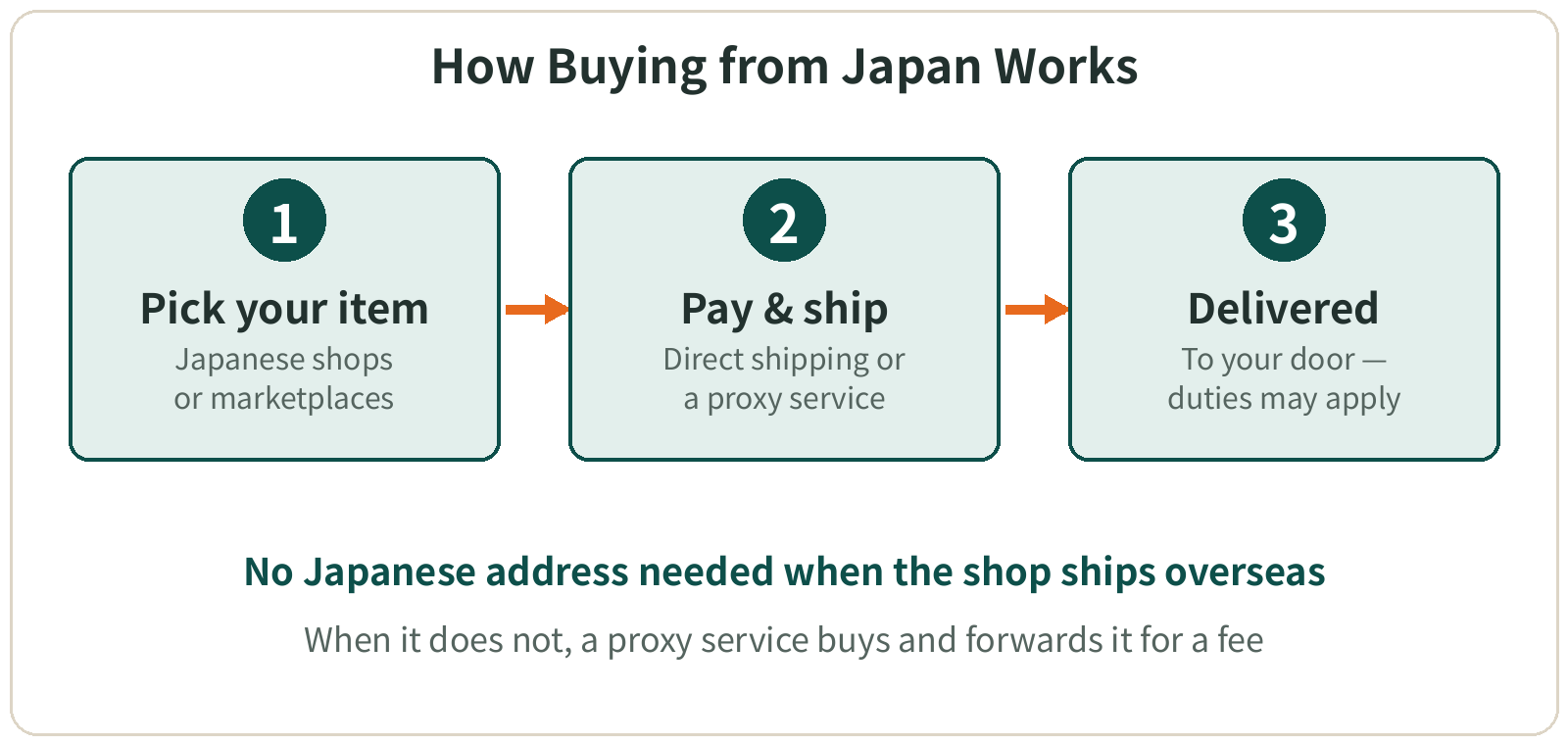
Almost every purchase from Japan falls into one of these three routes. The guides explain which route fits which item.
Direct international shops
Stores in Japan that sell and ship overseas themselves, with English checkout. The simplest route: you order, they ship. Best for new items.
Proxy buying services
A service in Japan buys items on your behalf from Japanese shops and auctions that don't ship abroad, then forwards them to you. Opens up the whole Japanese market, for extra service and shipping fees.
Used marketplaces
Japanese sellers list large numbers of used keyboards and retro consoles on international marketplaces. Often the best source for discontinued models — if you check condition and seller carefully.
Customs and taxes
On top of the item price, expect international shipping, and in many countries import duties or sales tax on arrival. Since August 2025, the US no longer exempts low-value parcels (the old $800 de minimis rule) from duties, so US buyers should budget for that too. Always confirm the total cost before ordering.
Who writes this site
This site is written and maintained in Japan by a working PC setup and troubleshooting technician — someone who installs, configures and repairs computers and home networks for customers every day, and who handles Japanese keyboards and game hardware hands-on as part of that work.
The goal is practical: explain the buying routes, the real costs, and the easy-to-miss details (a model number suffix, a voltage marking, a condition grade) the way a technician would explain them to a customer. No hype, and no prices stated as fact — prices and fees change, so every guide tells you where to check the current figure.